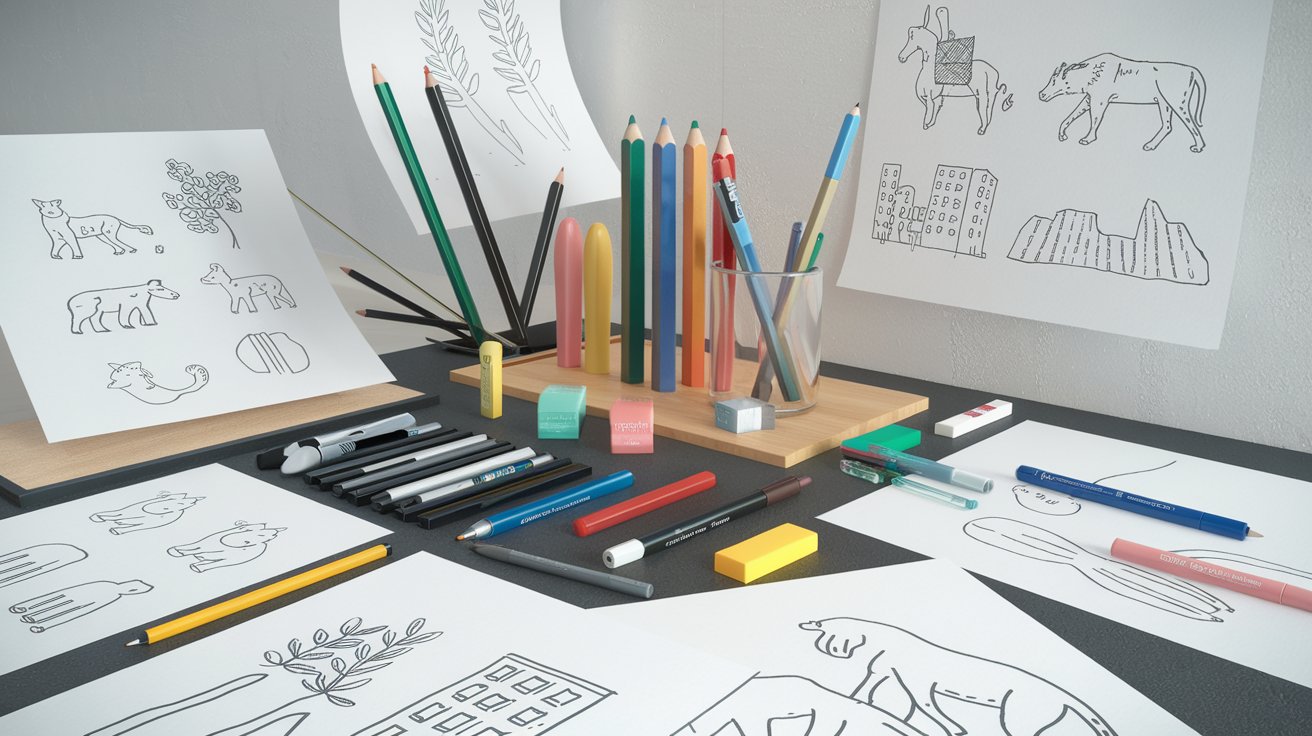
Starting your drawing journey can feel overwhelming, but mastering basic sketches is easier than you think. This comprehensive guide presents over 50 easy drawing ideas for beginners that anyone can create with just a pencil and paper. Whether you’re exploring cute animals, simple shapes, or everyday objects, these step-by-step tutorials will build your confidence and develop essential artistic skills that form the foundation for more complex artwork in 2026 and beyond.
What is the Easiest Thing to Draw as a Beginner
The easiest things to draw for beginners are simple geometric shapes and objects with basic outlines. Circles, squares, and triangles form the foundation of nearly every drawing, making them perfect starting points. In 2026, art educators across the United States emphasize that basic shapes help beginners understand proportion, symmetry, and spatial relationships without the pressure of creating perfect representations.
Common easy drawing subjects include stick figures, simple flowers with circular centers, basic houses using rectangles and triangles, and cartoon faces with minimal features. These subjects require minimal detail while still producing recognizable results. The key is choosing objects that can be broken down into fundamental geometric components, allowing you to focus on hand control and line confidence rather than complex shading or perspective.
Essential Drawing Supplies for Beginners
Starting your drawing practice requires minimal investment in supplies. A standard HB pencil, eraser, and plain paper are sufficient for most beginner drawing projects. In the United States, these basic supplies cost approximately five to ten dollars at major retailers in 2026, making drawing one of the most accessible artistic hobbies available.
As you progress, consider adding a drawing pencil set with varying hardness levels from 2H to 6B, a quality eraser, a pencil sharpener, and smooth drawing paper. Many beginner artists also benefit from having a blending stump for shading techniques and a ruler for creating straight lines in architectural or geometric drawings.
100 Easy Things to Draw for Practice
Building a diverse drawing repertoire helps develop versatility and prevents creative blocks. This collection of 100 easy drawing ideas spans multiple categories, ensuring you always have inspiration regardless of your mood or skill level. Regular practice with varied subjects strengthens different aspects of your drawing abilities, from observational skills to creative expression.
Simple Shapes and Objects
Begin with everyday objects that surround you: coffee mugs, books, apples, light bulbs, keys, pencils, scissors, clocks, bottles, and boxes. These items feature clear outlines and simple forms that help you understand basic proportions and three-dimensional representation. Practice drawing these objects from different angles to improve your observational skills and understanding of perspective.
Geometric patterns also provide excellent practice opportunities. Try drawing mandalas, tessellations, checkerboard patterns, spirals, and repeating shapes. These exercises improve hand control, precision, and patience while creating visually satisfying results that beginners can be proud of displaying.
Nature and Plant Drawings
Natural subjects offer endless drawing inspiration with varying complexity levels. Start with simple leaves, focusing on basic oval or heart shapes with a central vein. Progress to flowers like daisies with circular centers and simple petals, sunflowers with distinctive seed patterns, or tulips with elegant curved shapes. Tree drawings can begin with basic trunk and branch structures before adding foliage details.
Other nature drawing ideas include clouds, mountains with triangular peaks, simple grass blades, mushrooms with rounded caps, stones and pebbles, raindrops, snowflakes, and basic landscape horizons. These subjects help you understand organic forms and natural patterns that differ from manufactured objects.
Cute Easy Drawing Ideas for Beginners
The cute drawing aesthetic remains incredibly popular in 2026, especially among younger artists and social media creators in the United States. This style typically features simplified forms, large eyes, rounded shapes, and minimal details that create an appealing, approachable look perfect for beginner skill levels.
Common cute drawing subjects include kawaii food items like smiling donuts, happy clouds with faces, adorable animals with exaggerated features, chibi-style characters with oversized heads, and anthropomorphic objects like friendly plants or pencils. The key to cute drawings lies in emphasizing round shapes, adding simple facial expressions, and keeping details minimal while maximizing charm and personality.
Easy Animal Drawing Ideas Step by Step
Animal drawings rank among the most requested beginner projects, but they can be approached systematically. Start with animals that have simple body structures and minimal anatomical complexity. Step-by-step animal drawing breaks down complex forms into manageable geometric shapes that gradually build toward a recognizable creature.
Simple Animal Faces
Begin your animal drawing practice with faces rather than full bodies. Cat faces start with a circle, add two triangular ears, simple eyes, a small nose, and whiskers. Dog faces follow similar principles with floppy or pointed ears depending on breed. Rabbit faces emphasize long oval ears and a distinctive split upper lip. Bird faces focus on a circular head with a triangular beak and round eyes.
These simplified animal faces teach proportion and feature placement without the complexity of full body anatomy. Practice different expressions by varying eye shapes and mouth positions to create happy, surprised, or sleepy animals that add personality to your drawings.
Full Body Animal Drawings
Once comfortable with faces, progress to simple animal bodies. Fish make excellent first subjects with their basic oval body, triangular fins, and tail. Butterflies combine symmetrical wings with a simple body line. Snails offer practice with spiral shells attached to curved bodies. Simple birds can be drawn as an oval body with a circular head, triangular beak, and simple wing shapes.
More ambitious beginners can attempt four-legged animals like cats, dogs, or horses by starting with basic body ovals and adding stick-like legs, then gradually refining the forms. The key is maintaining proper proportions and understanding how the body parts connect logically.
Easy Drawing Ideas with Pencil Techniques
Pencil remains the most accessible and forgiving drawing medium for beginners in 2026. Understanding basic pencil techniques dramatically improves your drawing quality and expands creative possibilities. Different pencil pressures create varying line weights, while shading techniques add depth and dimension to simple drawings.
Essential pencil techniques for beginners include hatching for creating directional shading, cross-hatching for darker tones, stippling for textured effects, and blending for smooth gradients. Practice controlling your pencil pressure to achieve light sketching lines for initial construction and darker lines for final outlines. These fundamental skills transform flat drawings into more realistic and visually interesting artwork.
Character and Cartoon Drawing Ideas
Cartoon and character drawings allow for creative expression while being forgiving of anatomical imperfections. Beginner character drawing often starts with simple stick figures, then progresses to basic body shapes, and eventually incorporates clothing and distinctive features that define personality.
Popular character drawing subjects include emoji-style faces with various expressions, simple superhero figures with basic costumes, stick figure families, basic fantasy characters like wizards or princesses, and simplified versions of popular culture icons. The stylized nature of cartoon drawings means you can exaggerate features, simplify details, and focus on capturing the essence of a character rather than photorealistic accuracy.
Food and Everyday Objects
Food items provide excellent drawing practice because they combine familiar forms with interesting textures and details. Ice cream cones, cupcakes, pizza slices, fruits, and beverages all feature recognizable shapes that beginners can successfully reproduce. In 2026, food illustration remains highly popular on social media platforms, making these drawing skills both personally satisfying and potentially shareable.
Other everyday object drawings include household items like lamps, chairs, potted plants, books, cameras, musical instruments, and electronic devices. These subjects help develop observational skills as you notice details in objects you encounter daily. Simple object drawing teaches fundamental concepts like perspective, proportion, and shading that apply to more complex subjects later.
Seasonal and Holiday Drawing Ideas
Seasonal subjects provide timely drawing inspiration throughout the year. Spring offers flowers, butterflies, rain clouds, and baby animals. Summer features sunshine, beach scenes, ice cream, and outdoor activities. Fall brings leaves, pumpkins, apples, and cozy elements. Winter includes snowflakes, snowmen, holiday decorations, and warm beverages.
Holiday-specific drawing ideas for beginners include hearts for Valentine’s Day, shamrocks for Saint Patrick’s Day, eggs for Easter, flags for Independence Day, jack-o-lanterns for Halloween, turkeys for Thanksgiving, and ornaments for Christmas. These themed drawings create opportunities for greeting cards, decorations, and seasonal artwork that connects your practice to real-world applications.
Step-by-Step Drawing Process for Beginners
Developing a consistent drawing process improves results and builds confidence. Start every drawing with light sketching to establish basic shapes and proportions. This preliminary stage allows for easy corrections without committing to permanent lines. Use simple geometric forms as guides, gradually refining them into more specific shapes.
The typical beginner drawing workflow progresses from light construction lines to defined outlines, then adds details, and finishes with shading or coloring if desired. Always work from general to specific, establishing the overall composition before focusing on small details. This methodical approach prevents common mistakes like misaligned features or incorrect proportions that are difficult to fix later.
Common Beginner Drawing Mistakes to Avoid
New artists frequently make predictable mistakes that hinder progress. Drawing too small is one of the most common errors; working on larger surfaces allows better control and detail development. Another frequent issue is pressing too hard with the pencil during initial sketches, making erasures difficult and leaving permanent indentations in the paper.
Additional beginner mistakes include neglecting basic shapes as foundation elements, rushing through drawings without proper observation, comparing your work unfairly to experienced artists, and giving up after unsuccessful attempts. Remember that every professional artist produced countless beginner-level drawings. The key to improvement is consistent practice, patience with your progress, and learning from each drawing attempt regardless of the outcome.
Building a Daily Drawing Practice
Establishing a consistent drawing habit accelerates skill development more than sporadic intensive sessions. In 2026, research from art education programs across the United States confirms that daily fifteen-minute practice sessions produce better long-term results than weekly two-hour sessions. Brief daily practice maintains muscle memory, reinforces techniques, and prevents skill regression between sessions.
Create a sustainable drawing routine by setting realistic goals, preparing your supplies in advance, choosing a consistent time and location, and maintaining a sketchbook to track progress. Many successful artists recommend morning drawing sessions to boost creativity throughout the day, though any consistent schedule works. Focus on enjoyment rather than perfection, allowing your drawing practice to become a relaxing habit rather than a stressful obligation.
Digital vs Traditional Drawing for Beginners
The choice between traditional and digital drawing depends on personal preferences, budget, and goals. Traditional drawing with pencil and paper remains the most accessible option, requiring minimal investment and no technical learning curve. It provides direct tactile feedback and doesn’t depend on batteries or software updates. Most art instructors recommend beginners start with traditional media to develop fundamental hand-eye coordination and understand basic principles.
Digital drawing offers unique advantages like unlimited undo functions, easy color changes, and the ability to work in layers. However, quality drawing tablets cost between 50 and 500 dollars in the United States in 2026, and digital software adds another learning dimension. Many artists eventually use both mediums, applying traditional skills to digital platforms or using digital tools for planning traditional artwork.
Related video about easy drawing ideas for beginners
This video complements the article information with a practical visual demonstration.
Your questions answered
What is the easiest thing to draw as a beginner?
The easiest things for beginners to draw are basic geometric shapes like circles, squares, and triangles, which form the foundation of more complex subjects. Simple objects like stick figures, basic flowers with circular centers, and everyday items such as apples or coffee mugs are also excellent starting points. These subjects help beginners focus on hand control and basic proportions without overwhelming detail, building confidence through recognizable results that require minimal artistic experience.
How many drawings should a beginner do daily?
Beginners should aim for at least one to three drawings daily, with sessions lasting fifteen to thirty minutes. Consistency matters more than quantity, so even brief daily practice produces better results than occasional marathon sessions. Start with simple subjects that can be completed within your available time, gradually increasing complexity as your skills improve. Daily practice maintains muscle memory, reinforces techniques, and accelerates skill development without causing burnout or frustration that might discourage continued practice.
Do I need expensive supplies to start drawing?
No, beginners need only basic supplies costing approximately five to ten dollars in the United States in 2026. A standard HB pencil, basic eraser, and plain paper are sufficient for starting your drawing journey. As you progress and identify specific interests, you can gradually invest in additional tools like varied pencil grades, quality erasers, or specialized paper. Starting with minimal supplies removes financial barriers and allows you to focus on developing fundamental skills rather than collecting equipment.
How long does it take to get good at drawing?
Most beginners see noticeable improvement within three to six months of consistent daily practice, though becoming proficient typically requires one to two years of regular drawing. Progress varies based on practice frequency, quality of instruction, natural aptitude, and the complexity of subjects attempted. The key is focusing on incremental improvement rather than comparing yourself to professional artists. Every artist progresses at their own pace, and consistent practice with deliberate attention to technique produces better results than rushing through countless drawings without reflection.
Can I learn to draw if I have no natural talent?
Yes, drawing is a learnable skill rather than an innate talent. While some individuals may progress slightly faster initially, consistent practice and proper instruction allow anyone to develop competent drawing abilities. Research in art education confirms that dedication, structured practice, and willingness to learn from mistakes matter more than natural aptitude. The myth of inborn artistic talent discourages many potential artists, but numerous professional illustrators and artists started with no apparent natural ability and developed their skills through persistent practice and study.
What are some cool easy drawings for social media?
Cool easy drawings popular on social media in 2026 include kawaii-style food with faces, simple mandala patterns, minimalist line art portraits, cute animals with exaggerated features, and aesthetic doodles featuring plants or celestial objects. These subjects combine visual appeal with beginner-friendly execution, making them perfect for sharing online. Focus on clean lines, bold shapes, and recognizable subjects that translate well to small screens. Adding simple shading or color can enhance visual impact while maintaining the drawing’s fundamental simplicity.
| Drawing Category | Skill Development | Best For |
|---|---|---|
| Basic Shapes | Hand control and proportion | Complete beginners building foundation |
| Everyday Objects | Observation and perspective | Developing realistic drawing skills |
| Cute Characters | Expression and personality | Creative expression and social sharing |
| Nature Elements | Organic forms and textures | Understanding natural patterns |
| Animals | Anatomy and movement | Progressive complexity challenges |
| Seasonal Themes | Variety and application | Practical projects and gifts |